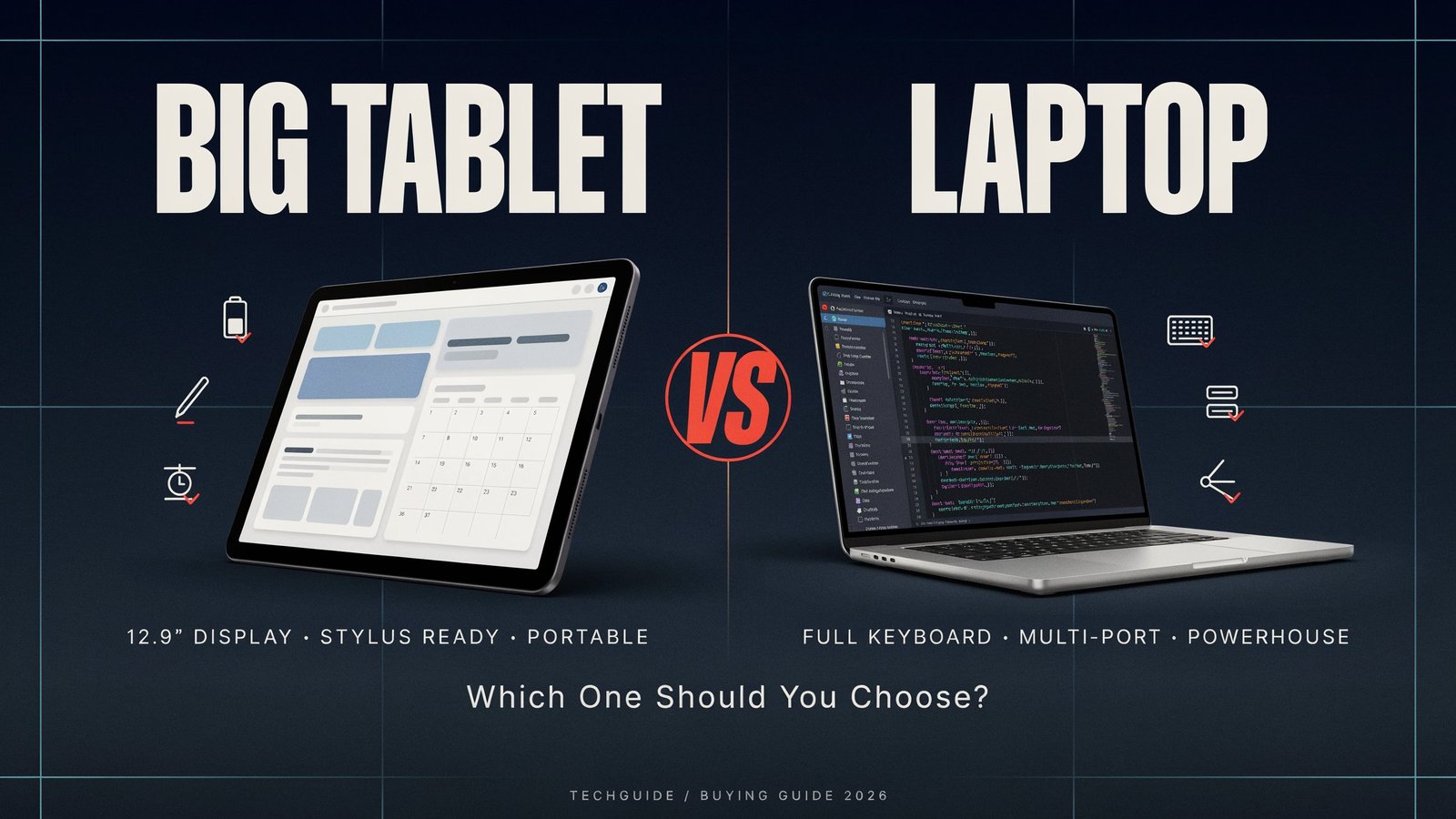
But where it was once easy to choose between one of the two options (a tablet and a laptop), that is no longer the case. With larger screens, faster processors and accessories such as keyboards and styluses now becoming a staple, a large tablet computer can now become every day functioning and competitive with lots of desktop computers. However, the two devices are designed for different needs and it’s entirely up to you as to which one you choose for your needs.
Identifying the Essentials and Options
Tablets and laptops have different priorities in their design. Laptops focused on utility and providing complete operating systems, physical keyboards and a strong multi-tasking. Tablets on the other hand, were built with portability and touch in mind and build on simplicity and ease of use rather than raw compute power.
But this distinction has gotten almost washed away in the past few years. A big screen tabla and a keyboard casing is going to be able to perform anything that you’ve performed on laptop computer and is more lightweight and versatile. Make sure to select appropriately based on your needs.
Portability and Convenience
Another highlight of the big tablet computer is the ability to move them around. Tablets are much heavier than most laptops being significantly lighter and thinner – even with a bigger screen this makes them easier to move around with during the day and brings advantages in a laptop. Whether you’re commuting for work, on the go or just moving between rooms at home, a tablet is far less cumbersome.
But tablets are also likely to get longer battery life, with many tablets providing days of battery life from a single charge. This often makes them attractive for individuals that need a device to work but are unable to find a power out or always need to search for a power outlet.
The laptops are no easy task to carry around, though not as “bulky” as the towers, they may require the use of a laptop bag or case, particularly if the laptop is larger with a larger screen.
Performance and Multitasking
In raw performance, a laptop still has its edge, especially for tasks that require extensive resources such as video editing, software coding, or running several huge applications at the same time. The operating systems for laptop devices are designed for multi-tasking, which means that users can operate a number of complex applications simultaneously without experiencing a lot of delays.
However, much of this gap has narrowed with one of the modern big tablet computers. Today, most tablet models are capable of split screen multitasking, compatible with external displays, and even use desktop-class applications, giving them a surprising amount of power to edit documents, make presentations and any number of activities that can be done online.
If you are a casual user, student or professional with casual demands of emailing, browsing, note-taking and basic document work, the performance of a tablet may be just fine.
Input Methods and Usability
One of the most important factors to think about is how you will engage with each device. Unlike other models, all laptops feature an integrated touchpad for mouse input and a physical keyboard, making them well suited for extensive typing such as writing reports, coding or managing spreadsheets.
A big tablet computer is predominantly touch driven, although most new tablets have detachable keyboard and stylus which can help fill this void. Traditional laptops may not be as good when it comes to creating intricate illustrations or jotting down notes like tablets are, depending on the creative professional’s preferences; for some, it may simply be the stylus feature.
Software & App Ecosystem
Usually laptops use the same full desktop operating systems that provide access to a wider choice of professional software like large design programs, deep coding platforms and specific business applications. This makes laptops the obvious choice for those picking out a computer for professionals who value also a particular software.
Tablets rely on mobile-centric platforms, and although the platforms are growing in strength, they are by no means as strong as a desktop experience in running some applications that are only available for desktops. But tablet’s app ecosystems are up to the demands of most daily activities—streaming, browsing, social media, reading and some productivity.
Price Considerations
The price difference between the two types ranges slightly, but generally speaking, a big tablet computer, with a similar spec is cheaper than a similarly powerful laptop, not to mention that there are many jobs/tasks which don’t require much of the computer’s resources. But price differences can be reduced significantly when you throw in extras such as your stylus and keyboard.
Laptops can be more expensive than desktops and have attributes–in terms of expandability, long-term performance for heavy workloads, and upgrade and storage options–which can justify the purchase price.
What’s the Best One?
So at the end of the day, which one you select will depend on the kind of lifestyle or work you have. A large tablet PC is actually a great portable content consumption, note taking, light productivity or creative device to draw and sketch with, whatever you like to do with it. Its compact form and extended battery life make it perfect for always on the go!
However, those who work heavily with multitasking, specialized software, extensive typing or resource intensive applications will need a laptop. It is more suitable for professional environments with its physical keyboard, more powerful processing, and larger software selection.
The choice is not always about what to eventually settle for – sometimes it is prudent for many to maintain both or even have a hybrid device, so that they can have the best of both worlds when they need it.
Final Thoughts
There is no one universal answer regarding the question that whether to choose for a large size tablet computer or a laptop. Today, both devices have come a long way and the boundaries that separated them in the past are not as distinct. Whether it’s portability, performance, input preferences or budget, by assessing your specific needs you will be able to choose a device that comfortably fits your lifestyle and even your working habits.



