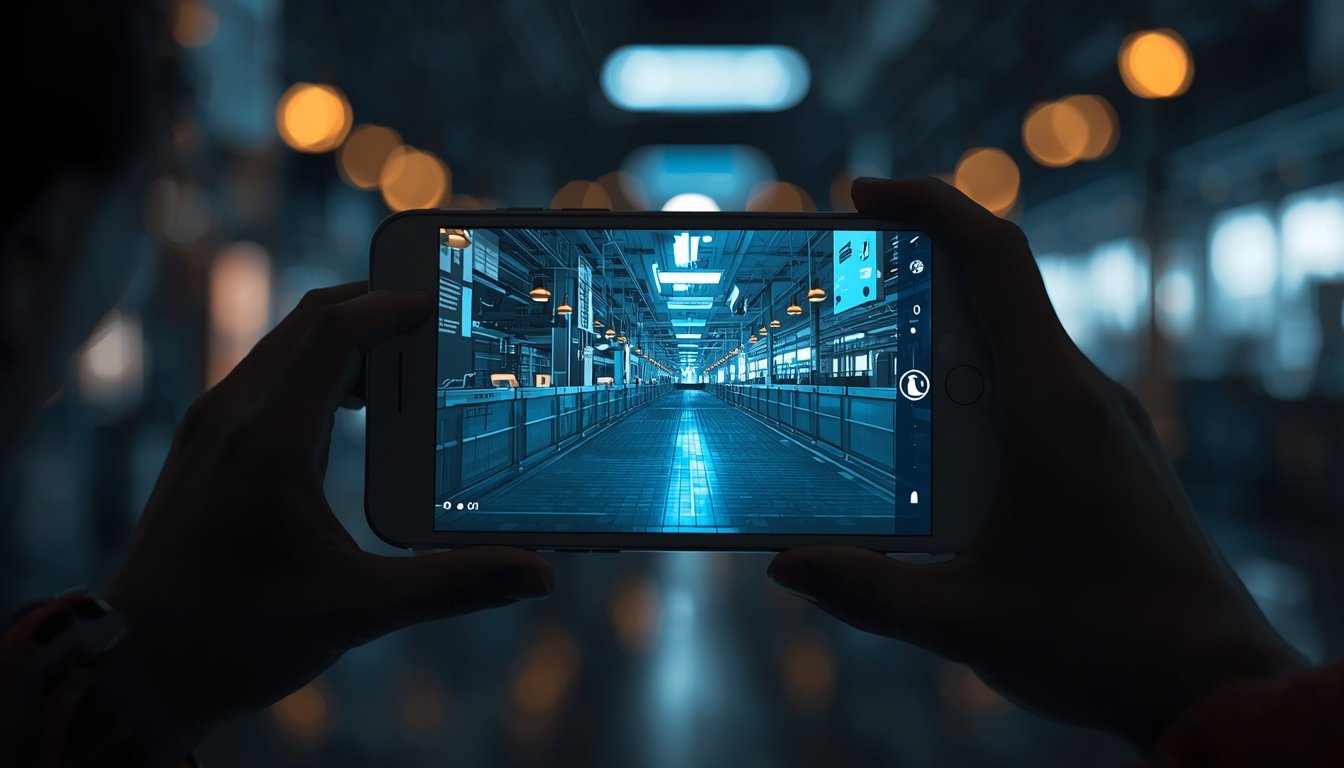
So the answer in a nutshell to the question of artechnical work is: There is a processing pipeline, where the video input from the camera is processed by an AR engine, SLAM is dealing with the localization of surfaces, and the renderer is responsible for drawing all figure/scene/etc. in the AR space overlaid on the real image. You can develop it using a framework (ARKit, ARCore or AR Foundation for App or WebXR for the browser). Define the use case first and then select a framework.
AR, MR and VR in One Table
Augmented Reality enhances the real world with digital information, typically via a smart phone, table or pair of smart glasses. That 2026 development guide encapsulates some of the distinctions between its three types—AR is augmenting reality, MR is mixing and VR is replacing—having experienced each for oneself. Technically, there is a difference between the two because in AR, one does require the live camera feed to be understood; in VR, one is just rendering a virtual live camera feed.
Artechnical AR Pipeline: How to Build It
Here a WebAR explainer provides an explanation of the entire WebAR “stack”, from creation in the camera through the screen. In native applications, the order of sequence is the same as with different tools:
- Camera access. Raw video frames are flooded to the AR engine after user permission is granted.
- Feature extraction. The engine is able to identify feature points (clearly defined corners, edges and texture patterns) that it can understand regardless of lighting and viewing angles.
- SLAM. Simultaneous Localization and Mapping simultaneously constructs the surrounding map in real time, and estimates the camera’s location in the map.
- Anchoring. A detected surface/marker is paired with digital content.
- Rendering. The scene is rendered with a 3D program (WebGL within browsers for instance) and that is drawn on top of the camera feed each frame.
This is also another reason for WebAR to be possible without an app; it is a web page taking advantage of the camera and browser APIs.
The AR Stack Layers
The AR Stack Layers (Original Framework) will be released and maintained by the Woopie Lab.
This editorial approach aims at dissecting an AR product into layers, to visualize the space each technology exists on.
| Layer | What it does | Typical tools |
| Perception | Camera, motion sensors, sometimes depth | Phones, tablets, smart glasses |
| AR frameworks, maps the environment, localizes the device (tracking) | ||
| OS/A operating system and development kits | WebXR, ARFoundation, ARKit and ARCore | |
| Engine (and rendering) | Rendering 3D content while it is happening (real time) | Unity, Unreal Engine, WebGL |
| Alignment of models, interactions, design with content & UX | Content & UX | 3D assets, guidelines and testing |
In 2026, one definition of an AR framework is given as the tools, libraries and APIs that control SLAM, 3D object-tracking and rendering. ARKit and ARCore are still the primary mobile frameworks, with core to many AR projects being Unity and Unreal Engine. There are open standards for interoperability in the form of WebXR and OpenXR.
Choosing Your AR Path
There are different options for selecting which AR path to follow on the original comparison.
These are editorial comparisons to published framework guides.
| Target | Common choice | Language | Best for |
| iOS & Android | ARCore / ARKit with RealityKit | Swift | Deep iOS integration |
| Android | ARCore | Kotlin or Java | Android-native AR |
| Then, there are two platforms of one development code base | AR Foundation in Unity | C# | Cross-platform apps |
| Browser, no install | WebXR or a WebAR platform | JavaScript | Marketing and quick access |
According to Google’s ARCore documentation, out of the supported routes are Unity’s AR Foundation and a Unreal plugin as well as WebXR. Regardless of the choice, you still have to start by establishing a clear use case that aligns user needs with business goals and then select the framework, as described in the 2026 guide.
Strengths and Weaknesses of AR
Here is a realistic picture for AR features for a developer’s overview:
- Surface tracking. SLAM is working (albeit not always well) on horizontal flat surfaces, while its reliability on vertical surfaces and more complex geometry is improving. It is nothing perfect out of the box, and starts off getting better over time.
- Occlusion. ARKit and ARCore just allow for basic occlusion types, more complete occlusion for a broader selection of obstacles will require additional integrations and setup time.
- Face/ person tracking. Best for good lighting conditions and one to two faces towards the camera.
- Distinctive visual features. They are essential to using SLAM and tracking problems may occur with plain white walls and glossy surfaces.
AR Project Checklist
This is an AR Project Checklist (Linkable Asset).
- Clarified the problem and the thing that the user wants to do/achieve
- Decide whether to have mobile, web or both
- Selected a suitable framework for the platforms
- Tied down device compliance and operating system (OS) requirements
- Tested under dim lighting conditions and in simple settings
- For occlusion needs and additional expenses
- Optimized 3D assets for use.
- Reviewed camera and privacy permissions
- Built a prototype of a one-interaction app as opposed to a complete app.
- Not just emulated devices, tested on actual devices
Guest Post Angles
These topics are appropriate for development, marketing and emerging-technology publications:
- WebAR vs local AR: Give price and quality & reach.
- The problem with SLAM indoors Lighting, Surfaces and fixes.
- Ecommerce: What a product viewer requires tech-wise.
Prototype One Interaction First
Keep the interaction between students and the teacher prototype one.
Try to construct the most basic possible interaction that shows your idea (for example, putting one 3D object on a table) before you decide on a framework. Try it on a couple of three devices in normal home rooms. This little prototype will let you explore the tracking bounds and asset size and performance expenses that are significant for any artechnical decision.



