Most guides offer the uses of the web as a level list of shopping, e-mail, streaming, banking. That tells you what exists, not what to build. The teams that choose well don’t pick a technology first. They pick a job for the web to do. This article gives you a simple framework for that choice, plus a checklist you can reuse.
What “Application of Web” Actually Means
The web is a delivery platform: any software or content that runs in a browser, with no installation required. The application of web technology comes in three broad forms:
Web applications enable users to perform work or make transactions using either an online bank or an invoicing system.
Web platforms enable the linkage of various user groups, e.g., a marketplace or a learning portal.
This is important as the effort, security responsibilities, and cost increase rapidly as you move up. There’s a difference between a web-based brochure site, and a marketplace.
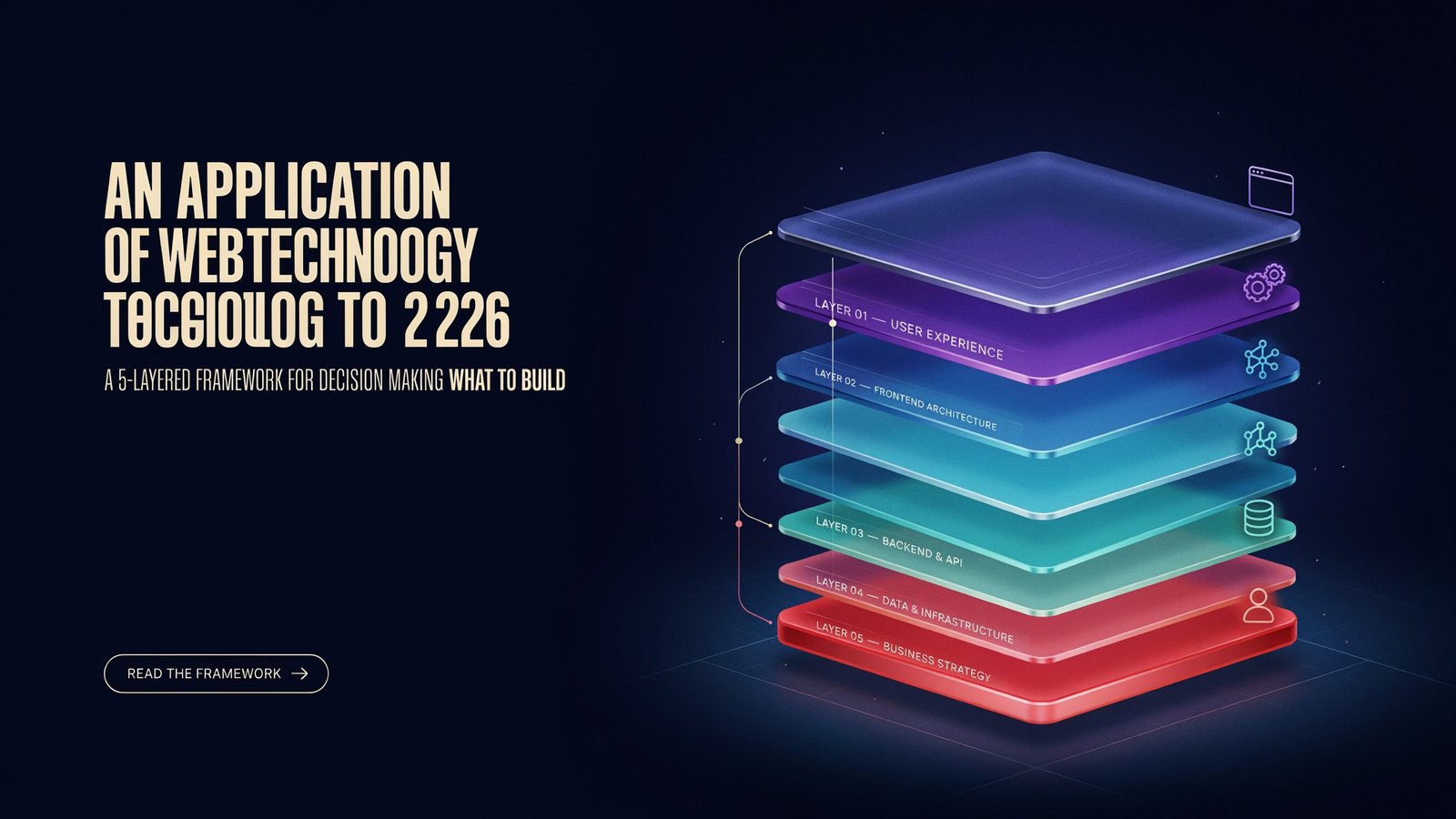
J.O.B.S. Framework: Five Layers of Web Use
This is a blueprint model of any web project that is original. Each layer is a solution to a different business question.
1. Inform: make knowledge easily accessible
These include government portals, documentation and blogs. Track success with organic traffic and time on page.
2. To make a deal or send a message of money or orders
Examples are online stores, booking systems, and payments. The metric to measure success is conversion rate and completed checkouts.
3. Cooperate: work together with others
These can include project boards, documents shared with the team, and meeting tools. Evaluate success based on WEEKLY ACTIVE USERS.
4. Automate: replace manual work
Examples are dashboards, CRMs, and workflow tools. Use hours saved per task as the criteria for success.
5. Connect: tie in systems and audiences
Examples are marketplaces, APIs, and social platforms. Use network growth and API usage as metrics to measure success.
Most of the products that are successful begin at a lower level and then expand upwards. An online store (Transact) is likely to come bundled with a customer dashboard (Automate) and follow-on with a seller portal (Connect). The problem with budgets is they skip layers. The old fashioned trend of developing a Connect-level platform before the Transact level offer has been proven is the classic over reach.
Use: One sentence with the name of your base layer. More than one layer if you need to describe version one, then too large for the first release.
Where the Web Delivers the Most Value
Commerce and Payments
The most obvious usage is on-line selling. Product catalogs, payment gateways, order tracking and inventory sync are now available to handle with both hosted platforms or custom builds. Its a decision of control as opposed to speed. A hosted platform installs in days, and doesn’t provide much customization options. Custom will be more costly, but will meet unusual requirements, such as regional tax rates or wholesale pricing.
Education and Skills
Utilizing Browser based Learning! beyond Video Lectures Coding sandboxes, quiz engines and cohort portals are completely browser-based. Where the real gains are is with reach, a student using an entry level cell phone on a dial-up connection can still access the site as long as it is light and the interface is elegant enough to work for low bandwidth.
BUILDING CONNECTED TO HEALTH AND SOCIAL CARE SERVICE AND SUPPORT
Fewer queuing times and paperwork with booking of appointments and result portals and online paperwork. It’s also the most dangerous as it involves confidential personal details. Don’t think of encryption as an afterthought or access logging and consent handling as an additional requirement.
Business Operations
The secret winners are web applications integrated within the application. An all-simple dashboard, built instead of a single spread sheet and three e-mail threads, will prove to be more effective for your content sooner than a customer facing redesign. This is the Automatisierungs-Schicht and that’s where small and medium-sized companies usually first start to pick up the sparks of return.
Web Project Readiness Checklist is a listing of items which must be considered to start a Web project
Before committing a budget, score your idea with these eight questions. Give yourself one point for each “yes.”
- Can you describe the user’s problem in one sentence?
- Have at least five real potential users confirmed the problem?
- Is the idea space consuming and requires login or stored user data? If not, then a simple site will suffice.
- If you’re looking for something that will make a successful end to your day, here’s the one thing.
- Is there a named person who will maintain it after launch?
- Have you checked the legal and privacy rules in your target market?
- Will most visitors arrive on mobile?
- Can version one launch without the “nice to have” features?
Your score: 0 to 3 means validate the idea before building. 4 to 6 means start with a lean version in a single layer. 7 to 8 means you are ready to plan architecture and budget. Save this list (can be utilized for ALL sorts of tasks).
Choose the most suitable construction approach for your application. Choose the best build method for your app.
If you select the layer, compare and contrast with a method of constructing the layer.
Inform layer can be used for static site or CMS. Low cost and quick, but not very interactive.
Quick launching with a hosted commerce platform: It’s ideal for using the Transact layer. It entails giving away some control and some obligations (some fees) that have to be paid forever.
The overlays “Collaborate and Automate” are included for Custom Web App. It will cost more, and needs a lot of maintenance.
For those who browse on a mobile device and for those who deal with unreliable internet connectivity, Progressive Web App (PWA) is for them. The device makes use of some features at the moment that are still limited.
The Connect layer is best suited to API first platform. Demands high security and good documentation.
This rule is applicable in all situations where you find a tool with an already implemented function, which can be used with a simple setup: If there is a tool that already has a function which can be used with a simple setup, use it. Continue to create workflows ad hoc that offer clear (tangible) competitive and/or differentiation opportunities.
Three basics determine the retention of the users of whatever layer
Speed. Slow pages = Slow loss of visitors, especially on mobile networks. Optimize images, minimize third party scripts and run images in Google’s Core Web Vitals tools before deployment.
Security. Use the principle of HTTPS everywhere: Validing all user input, keeping all dependencies up-to-date, and not storing user passwords as plain text on disk. The OWASP Top 10 shall serve as a good starting point for any application that requires any kind of user input.
Accessibility. By sticking to WCAG guidelines you’ll expand your audience and make it more usable for all of those large and small screen users, as well as those in bright sunshine.
The same type of foundations are looked for by search engines and AI when deciding which ones to trust and cite.
It is the Error that You Do NOT Want to Make
The top reason for most of the failings in a project is not a technical one, with web projects it is when they start to give up. It is buying based on features, without guarantees of buying.It is a purchase of characteristics that is going to have no certainty of demand. Teams spend months creating Dashboards, Notifications, and Integrations, but users only require one simple thing, correctly implemented! There is a much steeper learning curve with a narrow First release with one success criterion, than there is with any specification paper. Do not make any movement to enlarge the unit of work unless practical experience shows this expansion direction.
Quick Answers
What are some uses of the Internet that are not listed?
Presenting information, ecommerce, online interaction, collaboration, system or audience browser aggregation and system business automation solutions.
The difference between Web site and Web app?
If users just want to know and/or read, a web page is all they need. When they need login, data entry or tasks to be completed, you will require a web application.
What should each piece of the first version include?
Each user type, one core task, one success metric. Everything else waits.
Final Takeaway
The Web is not the most sophisticated, easiest to use! That matched one that is easy to find. Ensure consistency of naming your layer, check that you’re ready, choose the lightest variant you can, and protect speed, security and accessibility from the beginning. Using this reverse order reduces costs, gets on the air much earlier and prevents wasting the training time.