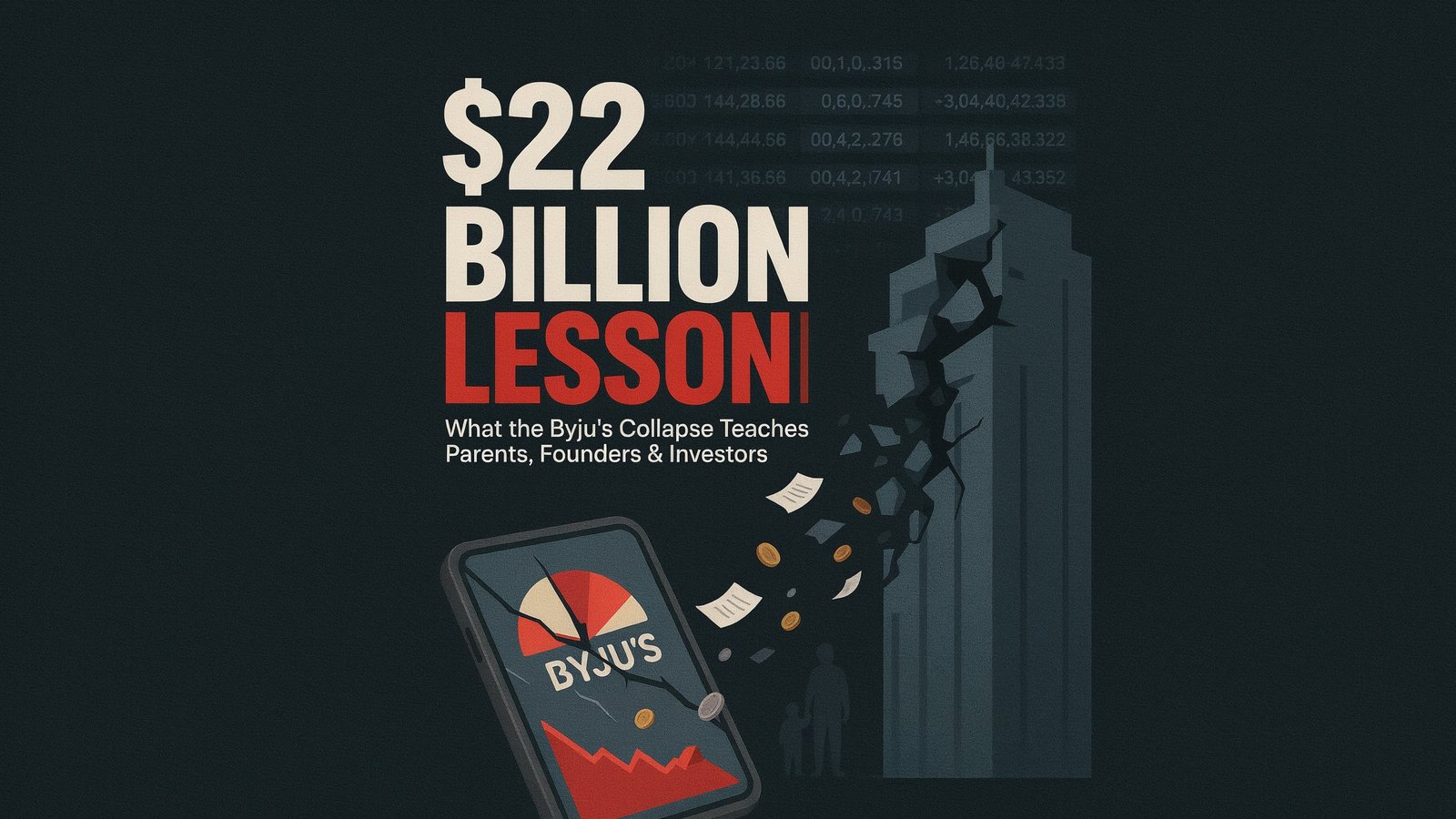
In 2022, India’s most valuable startup was worth $22 billion. Two years later, its own founder called that number zero. Most coverage retells the drama. This guide asks something more useful: what warning signs were visible early, and how can you spot them in the next education company you trust with your money, your savings, or your child’s schooling?
Where Things Stand Today
The parent company, Think & Learn Pvt Ltd, is still in formal insolvency. The key milestones:
One caution on that last row: the settlement resolves a specific ownership dispute and should not be read as a resolution of the wider financial crisis. Final commercial terms have not been publicly disclosed. Treat any headline announcing a “recovery” with skepticism.
The Number That Should Have Worried Everyone
For FY22, the company reported revenue of ₹5,298 crore and a net loss of ₹8,245 crore. By our arithmetic, that is about ₹1.56 lost for every ₹1 earned.
Burning cash to grow can be rational. But a loss larger than total revenue means the business model depends on a steady supply of new investor money. When that supply tightens, as it did globally in 2022-2023, there is no cushion.
The acquisition spree made this worse. The company bought the coaching chain Aakash for about $1 billion in 2021, adding physical centers and large obligations while the core business was still unprofitable. Aakash turned out to be the group’s most valuable remaining asset, and it is now at the center of the creditor fight.
Original Framework: The Five Fault Lines Test
After studying this case, we grouped the failure into five fault lines. Each one can be checked in any education or subscription company before you commit.
1. Loss-to-revenue ratio. Is the company losing more than it earns, year after year? Above 1.0 means growth is being financed by outside capital, not customers.
2. Acquisition digestion. Did it buy faster than it could integrate? Several large deals in a short window is a red flag.
3. Reporting discipline. Are audited financials filed on time? The company’s early trouble included a government inquiry into the non-filing of audited financials for the year ending March 2021. Delays in basic paperwork usually signal deeper problems.
4. Infrastructure dependency. Does the product depend on a single vendor that must be paid on time? One analysis traced the app’s disappearance to delayed payments to Amazon Web Services, which powered the backend. Unpaid cloud bills can switch a product off overnight.
5. Prepaid exposure. Are customers paying for years of service upfront? This is where a failure hurts ordinary families most, covered next.
What This Means for Parents: The Prepaid Risk Scorecard
Families took the hardest hit because many bought large bundles upfront, often financed through loans. The company argued in a 2022 filing that 98.5 percent of refund requests through official channels were processed within 48 hours. Consumer courts later heard cases where families said that promise failed. In one Bengaluru ruling, a forum ordered a refund of Rs 99,000 with 12% annual interest, plus damages and litigation costs.
Before paying any education company a large sum, give one point for each “yes”:
- Is the full amount due in one payment, or over a year?
- Is the course longer than 12 months?
- Is it financed through a third-party loan?
- Is the refund promise only verbal?
- Does the company lose money every year, or refuse to share financials?
- Would the lessons stop working if the company’s servers went offline?
0-1: Low exposure.
2-3: Negotiate shorter payment terms and get the refund policy in writing.
4-6: Walk away, or pay monthly only.
Question 6 matters more than it looks. When the app’s backend failed, existing users could not access paid subscriptions or video content. Paid-for lessons were suddenly unreachable.
If you’re impacted at this time, retain all receipts, loan agreements and emails. Submit a complaint to your district consumer forum and seek advice from a consumer-law expert as a creditor in an insolvency.
What Founders and Investors Should Take Away
Small debts can start big cases. A company worth $22 billion faced insolvency over a single unpaid sponsorship bill. Then something instructive happened: the debt was paid off and creditors first agreed to close the case, but India’s top court ruled that a creditor group had already formed and its say mattered. Settling one claim does not end a process once other creditors are in the room.
The responsibility of the founders goes beyond the company. According to one report, a Singapore court handed the founder six months’ imprisonment for breaches of asset-disclosure requirements. Please ensure that you check the most up-to-date status before using, as court cases are fast moving.
Governance is a product feature. Late audits, aggressive sales practices and disputes with lenders were all visible long before the shutdown. Boards and investors who treated them as background noise paid for it.
Conclusion
The truth isn’t “growth is risky”; it’s “growth without evidence of sustainable economics is borrowed time.” Always conduct the Five Fault Lines Test before investing, partnering and buying. Pay after running Prepaid Risk Scorecard. Remember that the story is still unfolding; settlements, auctions and negotiations with creditors are ongoing. Do not make decisions regarding a case without checking current court reporting.