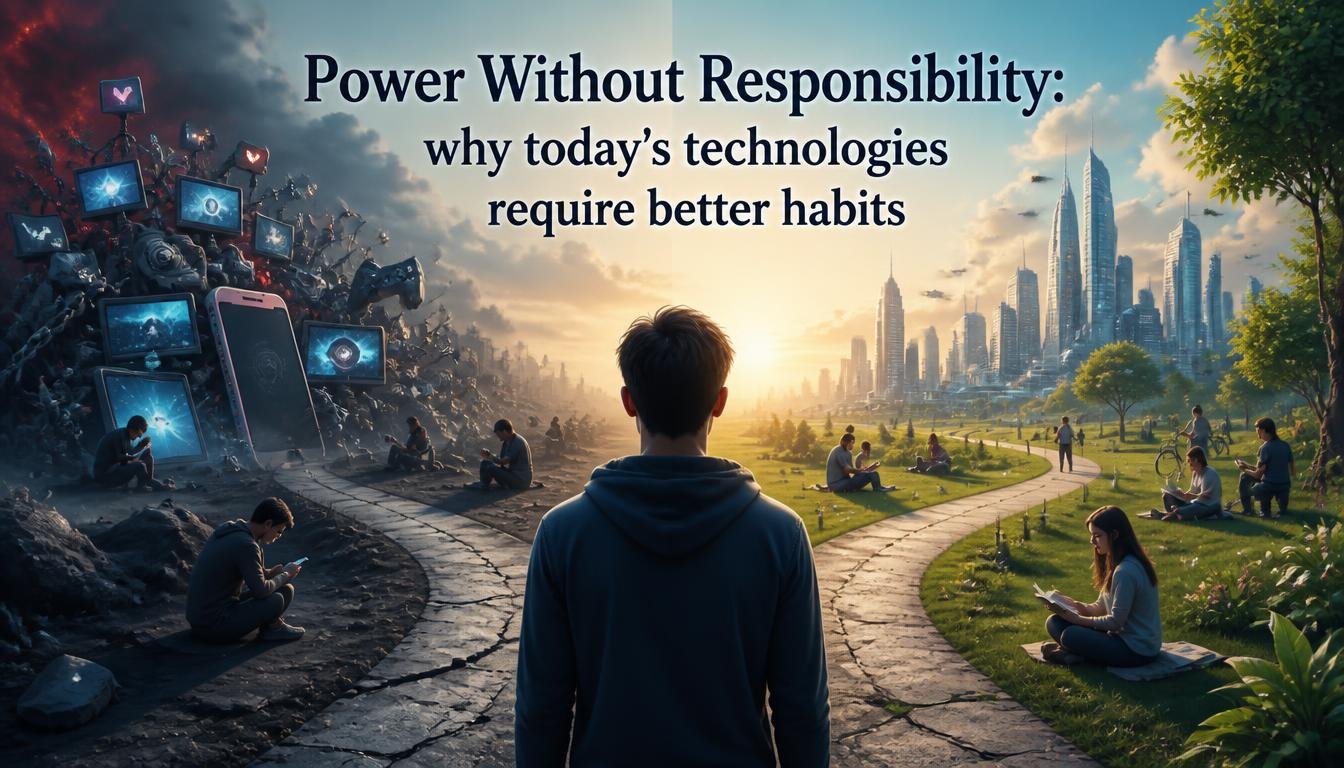
Every few months, a new tool becomes available that promises to save time, unite people, or accomplish a task that was unfeasible until then. Our emails are drafted by artificial intelligence, apps keep tabs on our sleep and a camera identifies us in seconds. However, someone’s ability is not the same as their wisdom. People ask us why is it crucial to use these technologies responsibly, but, in reality, it’s a larger question: what happens when the habits that govern our tools out-reach the rate of their development?
On improving health via clean water and sanitation
That a technology is always a multiplier is nothing new. The force behind an arm gets multiplied by a hammer and the reach of a question gets amplified by a search engine. Our decisions, data, and controls over others are multiplied by modern digital tools.
The issue is innovation exerts too much speed for reflection. Content and post content norms may develop over a period of years, a feature can be rolled out to millions in one night. In that gap, errors creep in unseen. A social media user posts an uninformed image, a business gathers more information than is necessary, or a student hands in a plagiarized paper created by a computer program. These all seem precisely mundane at the time, but they all go a long way to crafting the global digital environment all of us inhabit.
The Hidden Costs of Careless Use
If you use irresponsibly, it comes out in the open most of the time. It manifests itself as short-term conveniences that have long-term consequences.
Privacy erosion. Each app permission we agree to without reading and each form we’ve completed adds to a trail of information about us. This data, when leaked, sold, or juxtaposed with other information, is virtually irrecupérable.Misinformation at scale. With the help of generating tools, it can be trivially accomplished to create compelling content within seconds with the help of creating text, images, and video. Fake claims spread faster than corrections ever will when aspirating people share it without fact-checking it.
Systems that create biases. Automated systems are contaminated with human biases and human biases are contained within human data. Unfair employment, loan or educational practices can be repeated thousands of times if no one raises an objection to them.Damage to wellbeing. These endless notifications, comparison culture, and constant availability have an impact on the attention, sleep, moods. There are no promises that technology to keep us engaged is automatically technology to keep us healthy, too.
Why Is It Crucial to Use These Technologies Responsibly
The answer is shortcut – trust. The reason societies work is that people are able to take advantage of similar things – of banking, of hospitals, of schools, the news, digital platforms, and now intelligent software. Every reckless operation undermines the dependability. Trust erodes, people pull back, regulations tighten and the seed grain benefits of innovation are harder to come by.
There’s a fairness issue as well. Childhood, older age, and communities new to technology are all vulnerable groups where those who are most affected by the misuse of technology have the least resources to resist. As we protect them, good habits keep them safe as well.Last but not least there is accountability. A tool is not responsible for what it does – nor is the person or organization that makes the decision. Regard that responsibility seriously, and soar above recklessness to progress.
6 Everyday Habits that Make a Difference
Being responsible doesn’t mean applying technical skills. It begins with normal behaviours that anyone can adopt.
Stop and think before you share. Coolly check to see if a post, image or claim is true or not and if it is harmful or not.
Check the source. Search for the original publisher, the date and credentials before believing and passing on information.
Be mindful of your giving: Check the permissions of apps and disable the tracking you don’t require and don’t post sensitive information on public applications.
Verify machine-generated output. Take AI responses as an initial draft, quickly correct any mistakes before you use it.
Protect your accounts. Install strong and different passwords and two to safeguard your data and contacts.
Set healthy boundaries. Set aside time for no screens, turn off notifications that aren’t necessary, and keep in mind that you’re not available 24/7.
All of these steps are easy
They have the power of repetition as habits make culture more than occasional rules.The part that business, school, and govern work must play are discussed here.The responsibility cannot all be placed on individuals. Digital product companies should be open about their usage of data, review their systems for unfair side effects, and make safe settings the norm. Schools can incorporate digital literacy lessons with reading and math classes that help youth question what they are viewing on the Internet. Governments can establish specific guidelines that benefit citizens without stifling innovations.
In concert, when everyone is going in the same direction, responsible behavior ceases to involve a personal sacrifice and becomes the customary mode of behavior.
Where better to begin habits than at home
Strong, strong tools will continue to be sent; and each will offer possibilities, and temptations. The speed at which innovation comes and goes is out of our hands — and so is how we react to it — but we can make thoughtful reaction our concern. That’s the heart of why is it crucial to use these technologies responsibly: these are choices that will shape the future of digital progress to unite or divide communities.
Start small. Ask a question prior to sharing, check one privacy setting, or have one sincere chat with your team or family on how you use those devices. Power will always be there, but responsibility must be developed and the sooner the better, and every tool we create will have value the more we do so.



